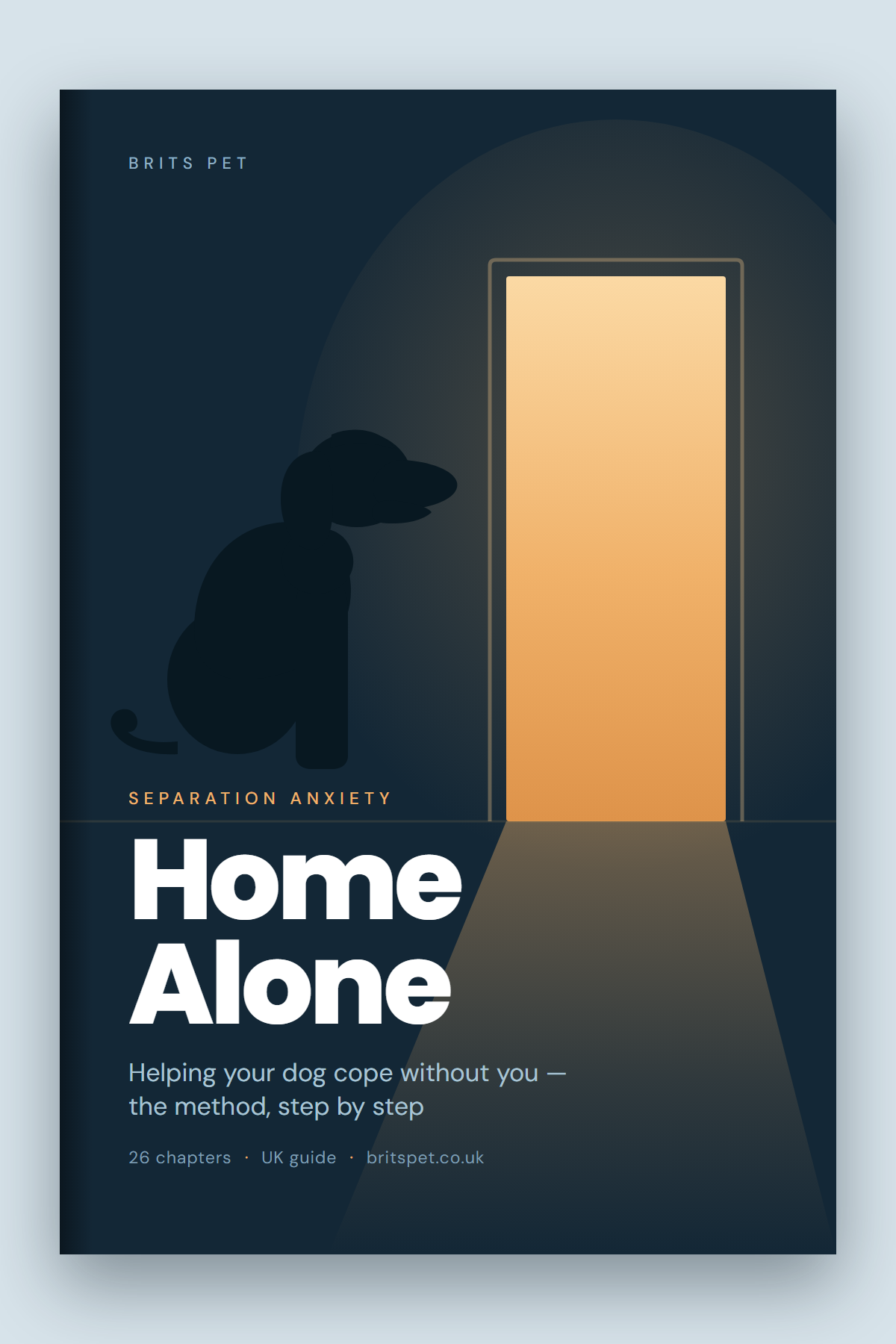
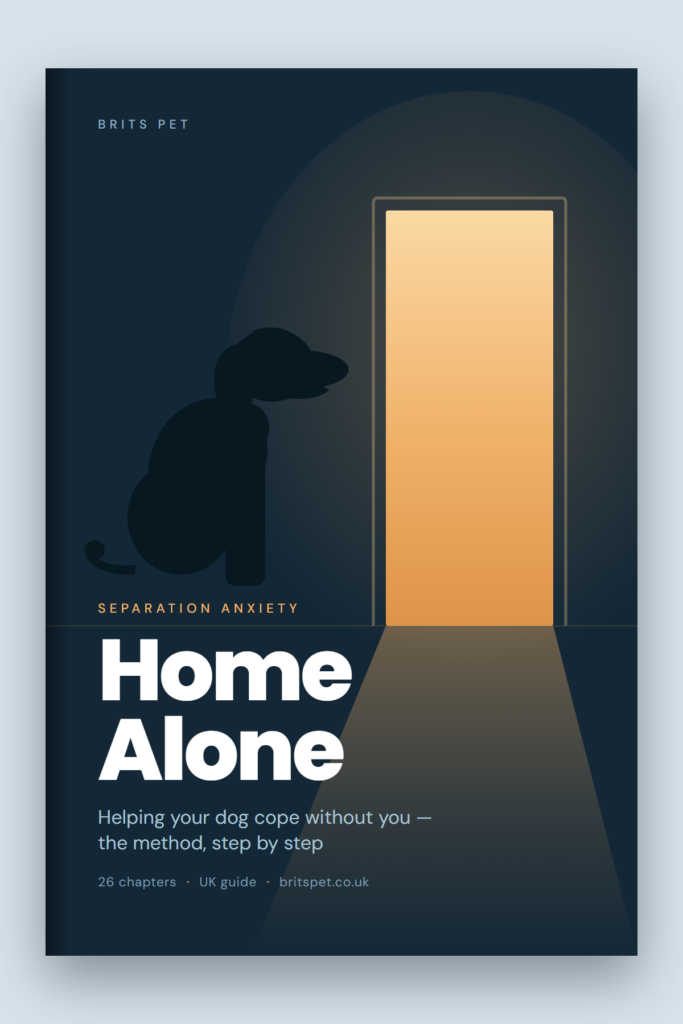
A plain-English dog separation anxiety guide for UK owners. Twenty-one pages and twenty-six short chapters built around what clinical animal behaviourists actually do — written for the person reading this at an odd hour, after a neighbour has said something.
About this item
- 21 pages, 26 chapters — the method, not a list of tips — Five short parts: understanding it, stopping the things that make it worse, the actual training, the rest of the day, and an honest look at reality. Each chapter does one job.
- It is far more common than owners think — Research cited by the RSPCA suggests eight out of ten dogs find it hard to cope when left alone, and that about half of them show no obvious signs at all. The quiet ones are not the fine ones.
- Four different problems, one chewed door frame — Panic, frustration, boredom and an unmet toilet need produce an identical scene and need completely different handling. This is the first thing the guide teaches you to tell apart.
- Buy a camera before you buy anything else — The camera-first method behaviourists start with, and what to look for in the first twenty minutes of footage, which is where almost all the useful information lives.
- Rule out pain first — A chapter most guides skip entirely. A dog that has started struggling with absences it used to manage is often telling you something physical, and the vet visit comes before the training plan.
- Graduated departures, properly explained — Finding your dog's real starting point instead of the one you hoped for, working the ladder step by step, and the five mistakes that quietly stall it for months.
- Keys, shoes, coat — Defusing the departure cues that start the panic before you have even reached the door, and why doing this out of order makes things worse.
- The uncomfortable bit, said plainly — Absence suspension: why the training barely moves while the dog is still being left to panic every weekday, and the practical options for getting through that period.
- The medication conversation — When it genuinely helps, what to ask your vet for, and what to expect. No drug names, no dosages, no amateur prescribing — those are your vet's decisions and the guide says so.
- Pheromones, supplements and food toys — What the evidence actually supports, and what a stuffed Kong does and does not do for a dog in real panic.
- Prevention, rescue dogs and setbacks — Building tolerance in a puppy, the particular picture in rehomed dogs, and what plateaus and bad weeks look like so you can tell them from failure.
- If you genuinely cannot do it — A frank final chapter, written without judgement, for the owners nobody else writes for.
Why we wrote it
- The destruction is not spite — And it is not a training failure. The howling, the chewed door frame and the puddle by the door are panic, and panic is treatable. Almost every owner arrives at this guide believing the opposite.
- Most advice online is a list of distractions — Leave the radio on, give them a chew, tire them out first. None of it addresses what is actually happening, and a tired dog in a panic is still a dog in a panic.
- So this guide works in the order behaviourists work — Diagnose it, stop making it worse, then do the graduated departures. Skipping to step three is the single most common reason people conclude it cannot be fixed.
- And it is honest about time — This is weeks and months, not a fortnight. A dog separation anxiety guide that promises otherwise is selling you something, and you will blame yourself when the deadline passes.
What is inside this dog separation anxiety guide
- The two o'clock in the morning search
- What separation anxiety actually is
- Four different problems wearing the same coat
- What it is not
- The signs you can see — and the ones you cannot
- Why it happens, and why it is not your fault
- Buy a camera before you buy anything else
- Rule out pain first
- Five things that make it worse
- Absence suspension: the uncomfortable bit
- Graduated departures, properly explained
- Finding your dog's real starting point
- Working the ladder
- Keys, shoes, coat: the departure cues
- Crates, rooms and safe spaces
- What food toys do and do not do
- Sleep, exercise and the shape of the day
- Medication: the conversation to have with your vet
- Pheromones, supplements and the evidence
- Preventing it in a puppy
- Rescue and rehomed dogs
- How long this actually takes
- Setbacks, plateaus and bad weeks
- Getting professional help, and who to ask
- If you cannot do it
- The short version
Format and delivery
- 21-page illustrated PDF — 26 chapters across five parts
- Instant download after purchase, with the link also emailed to you
- Opens on any phone, tablet, computer or e-reader
- Lifetime access — re-download it any time
- Follows RSPCA and PDSA guidance, with UK routes to qualified help through the ABTC, APBC and ASAB
Please note: This is general information for UK dog owners. It is not veterinary advice and is not a substitute for an assessment by your own vet or a qualified clinical animal behaviourist. If your dog is distressed, injuring itself, or you are worried, please speak to your vet.
No Refund Policy: All sales are final. Due to the digital nature of the content and immediate access to content materials, no refunds or exchanges will be issued under any circumstances. Product Gallery Images: Product Images are only for illustration purposes only. You will get a PDF or digital product.